• Resource
      SUPPORT
    • Getting started
    • Why ClearoutPhone?
    • Carrier Lookup
    • Phone Line Type Lookup
    • Enterprise
    • API Documents
    • BLOGS
    • TCPA Compliance and Phone Data: What Marketers Miss
    • SMS List Fatigue: Why Subscribers Stop Responding
    • View All Blogs
  • Integrations
  • Pricing
  • Developers
  • Login
REQUEST FOR DEMO
Akanksha Mishra / August 27, 2026 August 27, 2026

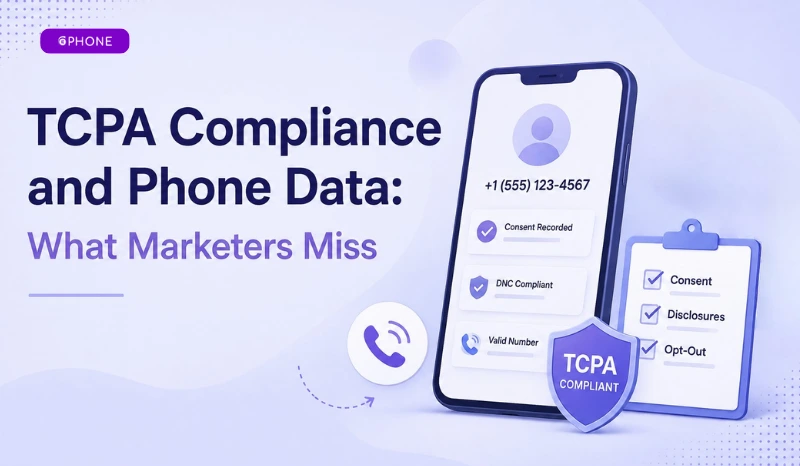
TCPA Compliance and Phone Data: What Marketers Miss


TCPA Compliance and Phone Data: What Marketers Miss

You’ve probably had a phone number in your database that looked perfectly fine. But when it came to sending a campaign, you still had to wonder: Can we actually reach this person?

That’s where things can get more complicated for marketers. A phone number may be valid, but that doesn't automatically mean you're ready to contact that person. You also need to think about consent, DNC screening, calling windows, and opt-out management.

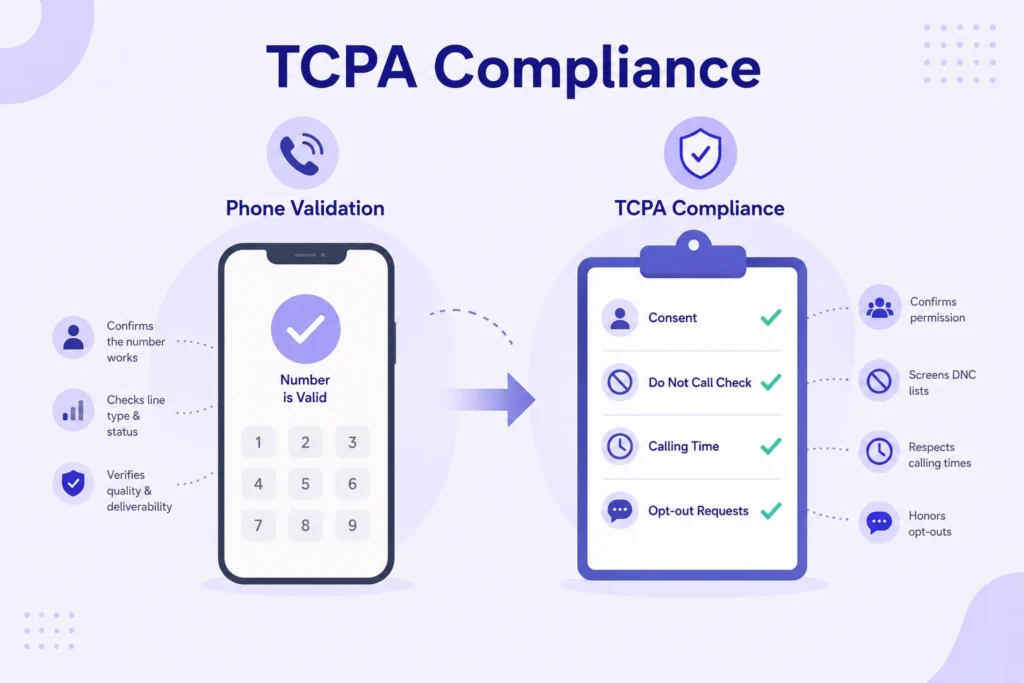
That’s where many marketers get tripped up. They treat phone validation and TCPA compliance as the same thing when they actually answer two very different questions: Can I reach this number? and am I allowed to contact this person?

In this guide, we'll break down where phone validation should be used in the process and where TCPA compliance is needed for a smarter outreach.

Table of Content


‣ What is TCPA compliance?
‣ What does TCPA compliance require for marketers?
‣ Why doesn't validation prove compliance?
‣ How should marketers manage phone data?
‣ How should phone data and compliance work together?
‣ What mistakes should marketers avoid?
‣ How often should compliance checks happen?
‣ What should marketers audit regularly?
‣ What happens when phone data changes?
‣ Final takeaway
‣ FAQ
What is TCPA compliance?


TCPA compliance and phone validation comparison.

TCPA compliance under the Telephone Consumer Protection Act (TCPA) covers rules for certain calls and text messages. The requirements depend on the communication type, technology, consent, timing, and other circumstances.

For marketers, compliance is about whether a specific outreach is permitted. A valid number can still require consent, DNC screening, suppression, or other compliance checks before outreach.

What does TCPA compliance require for marketers?


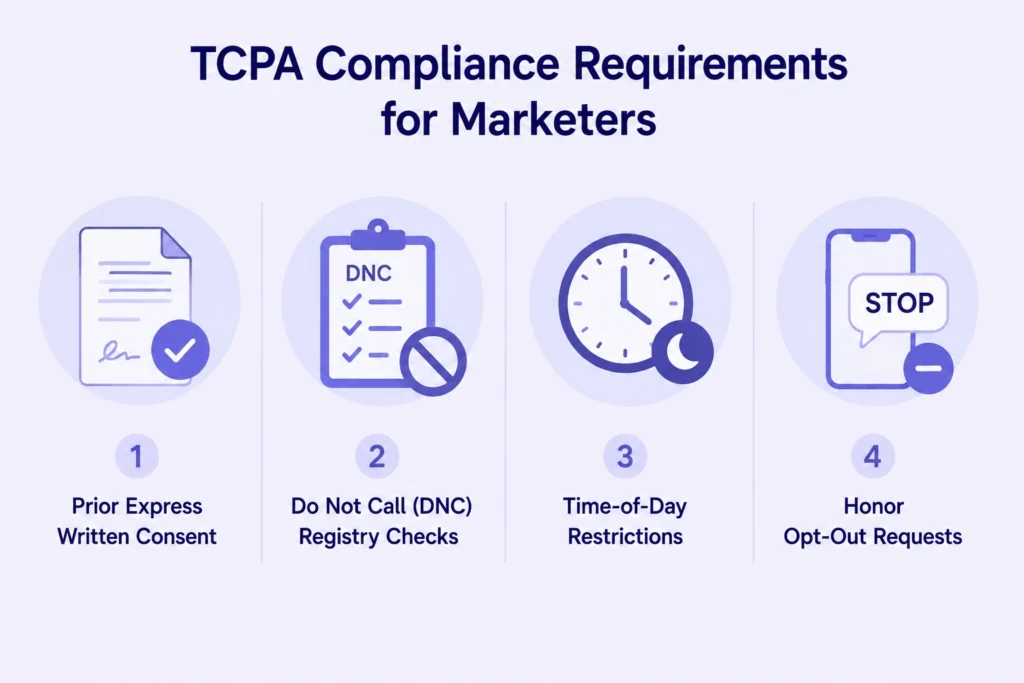
TCPA compliance requirements for marketers.

For businesses, a clean phone list is only one part of TCPA compliance for businesses. Marketers also need checks that determine whether each contact can receive the planned communication.

  • Prior express written consent

    For certain telemarketing calls and text messages, prior express written consent is required. The FCC has specific consent rules for calls and texts covered by its regulations.

    The consent record should connect the permission to the person and the phone number. It should also show when and how the permission was collected.

    This is where phone data and consent often get mixed together. A phone number in a CRM does not show what the person agreed to receive. A useful consent record can include the source, timestamp, form, disclosure, and communication type. Keeping these details makes the permission easier to verify later.

  • Do Not Call (DNC) Registry checks

    The National Do Not Call Registry is a separate compliance check for telemarketing calls. Covered sellers and telemarketers must follow applicable registry requirements. The FTC says businesses must access the registry and use data that is no more than 31 days old.

    Businesses also need an internal “Do Not Call” process. A person can directly ask a company to stop calling them. That request should update the company's suppression records. It should also prevent the number from entering another eligible calling list.

    Phone validation helps keep the number itself accurate and usable within the calling workflow. DNC screening adds the contact-eligibility step.

  • Time-of-day restrictions

    Calling at the wrong time is an important consideration for TCPA compliance for outbound calls. Under the FTC's Telemarketing Sales Rule, covered outbound telemarketing calls generally cannot happen before 8 a.m. or after 9 p.m. at the called person's location.

    That makes recipient timezone data useful for campaign controls. Teams should use the contact's local time instead of the sender's office time.

    For this type of workflow, ClearoutPhone provides time zone and geolocation information with its phone-data capabilities. This can support scheduling logic based on the recipient's location.

  • Honor opt-out requests

    A contact can change their mind after giving permission. Marketers need a process for recording and honoring valid revocation requests.

    For text messaging, common opt-out responses include STOP. The FCC has adopted rules addressing reasonable methods for consumers to revoke consent.

    The important part is the system behind the request. An opt-out should update the contact's suppression status before another marketing message is sent.

    SMS compliance requires marketers to manage consent and honor valid revocation requests. These requirements are an important part of TCPA compliance for SMS marketing.

Why doesn't validation prove compliance?


Phone validation and compliance checks solve different problems. One evaluates the phone record, while the other evaluates permission and outreach eligibility.

Phone data checksCompliance checks
Is the number valid?Did the person provide the required consent?
Is the number usable?Does the contact need to be suppressed?
What line type is it?Does DNC status allow the contact?
What timezone is associated with it?Is the outreach happening at an allowed time?
Is the phone record accurate?Has the person revoked permission?

Phone validation belongs to the data-accuracy layer. It helps marketers understand and maintain the phone number itself.

Compliance belongs to the permission and outreach-control layer. It determines whether the contact remains eligible for a particular communication.

A phone number can have a “No SMS Consent” status while a valid number can have a “Do Not Contact” status. Neither situation means the phone data is inaccurate.

How should marketers manage phone data?


A clean phone-data process starts with keeping phone contact data, consent, and suppression information organized. Marketers should also validate their phone lists regularly to catch changes in phone status and keep contact data current.

These details can remain connected to the same contact record while keeping each status separate.

  • Keep phone data organized

    Useful mobile contact data fields can include:

    • Phone number
    • Phone status
    • Line type
    • Carrier
    • Country
    • Region
    • Timezone
    • E.164-formatted number
    • Last validation date

ClearoutPhone supports phone validation across 248+ countries and can return line type, carrier, location, timezone, country, and E.164-formatted data. Its API can also validate numbers at the point of entry.

  • Maintain suppression records

    Suppression data should also remain separate from phone validity.

    Useful fields can include:

    • Internal DNC status
    • DNC screening status
    • Opt-out status
    • Opt-out date
    • Suppression source
    • Last compliance check

A phone number can remain valid after someone asks a company to stop contacting them. The phone record can stay in the CRM while its marketing eligibility changes.

For a broader process, see Steps to Maintain a High-Quality Phone Number Database. It covers practical steps for keeping phone records accurate, validating numbers regularly, and maintaining cleaner phone data over time.

How should phone data and compliance work together?


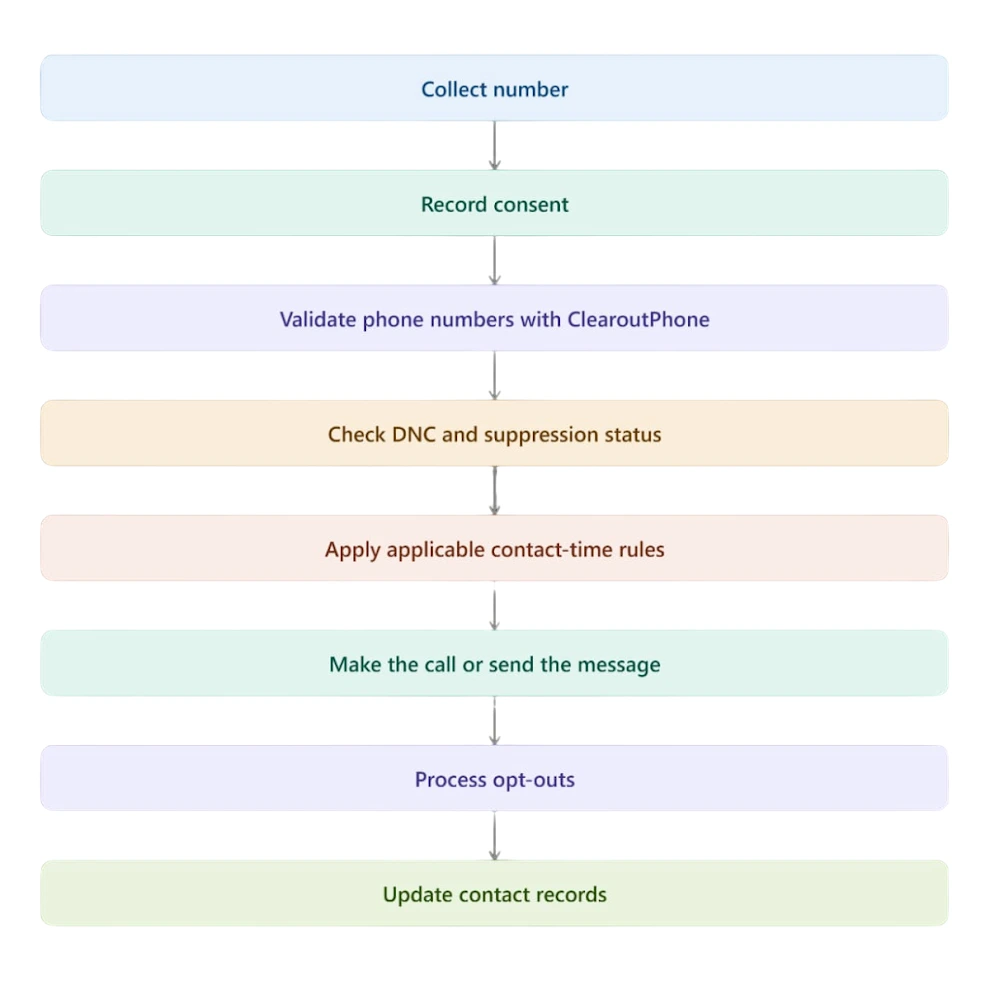
A reliable workflow treats validation as one checkpoint. Each step adds a different layer of information before the contact reaches an outreach campaign.

Phone compliance workflow.

Each step serves a different purpose.

  • Validation checks phone-data quality. Consent establishes the permission record.
  • DNC and suppression checks determine contact eligibility. Timezone information can support scheduling decisions.
  • Opt-out processing updates eligibility after contact. The next campaign should use the latest eligibility status.

What mistakes should marketers avoid?


Most mistakes happen when marketers use one data point as proof of something else. The following assumptions are especially risky.

"The number is valid, so I can call it.”


A valid number only tells you about the phone record. It does not establish permission for a marketing call.

"It's a mobile number, so I can text it.”


Mobile status describes the number. It does not prove that the person agreed to receive marketing SMS.

"We collected the number, so we have consent.”


Collecting a number and collecting consent are separate actions. Your records should show what the person agreed to receive.

"The person hasn't complained, so we're okay.”


Silence does not create consent. A lack of complaints does not replace the applicable compliance checks.

"We checked the number once, so we're covered.”


A previous validation result can become outdated. Consent and suppression status can change as well.

How often should compliance checks happen?


Compliance checks should be reviewed based on the campaign, communication type, and applicable requirements. DNC screening has specific timing requirements, while opt-outs should be processed when they are received.

Internal suppression records should be updated whenever a contact opts out. Waiting for a scheduled list-cleaning process can create unnecessary risk since phone data can change over time. Numbers can disconnect, change line types, or receive other updates.

For phone data, ClearoutPhone can help teams validate new numbers as they enter the database and revalidate existing records on a schedule. This helps keep phone records updated as contact data changes. The fewer invalid numbers you text, the lower the risk of your brand being seen as spam.

What should marketers audit regularly?


A campaign can start with accurate data and still develop gaps later. Regular reviews help catch changes before another campaign uses the same records.

Review these areas:

  • Consent records
  • DNC screening process
  • Internal suppression lists
  • Phone-data quality
  • Time zone information
  • Campaign eligibility rules
  • Opt-out processing
  • CRM and messaging-platform synchronization

The review frequency should match the campaign and applicable requirements. DNC screening, for example, has specific timing requirements under the FTC's rules.

What happens when phone data changes?


Phone data can change even when the contact's consent remains the same. A number may change status: line type, carrier, or other attributes over time.

Revalidating the number with ClearoutPhone helps keep the phone-data record updated as these details change. Consent and suppression information can continue to be managed alongside the updated phone record.

Final takeaway


Your phone data is never as static as you think. As a result, even a well-maintained CRM can become outdated faster than expected.

That's why you can first validate your phone data with ClearoutPhone. You can reach more of the right people, spend less on failed calls and messages, and work with contact records you can actually trust.

Want to keep your phone data accurate and campaign-ready?


Validate your contacts with ClearoutPhone

FAQ


1. Is a verified phone number compliant?
No. Phone verification addresses the quality of the number. But compliance depends on consent, DNC requirements, suppression, timing, and other applicable rules.
2. Does TCPA apply to SMS marketing?
Yes. If you're sending marketing texts, consent isn't something you can afford to overlook. TCPA rules may apply when automated texting systems or prerecorded messages are involved. Before you send a campaign, make sure you have the right permissions on file. And if someone asks to stop receiving messages, that request should be honored before any future outreach.
3. What are TCPA compliance requirements for marketers?
Marketers should evaluate consent, DNC requirements, applicable calling times, opt-out handling, and recordkeeping. State laws may add requirements.

Search

Recent Posts

  • TCPA Compliance and Phone Data: What Marketers Miss August 27, 2026
  • SMS List Fatigue: Why Subscribers Stop Responding July 31, 2026
  • Prevent OTP Delivery Failures and Improve User Onboarding June 30, 2026
  • SMS Drip Campaigns: The Complete Guide for 2026 June 3, 2026
  • How to Automate Phone Validation With ClearoutPhone API April 7, 2026

Phone Validation Service

Reach out to more real customers for your business

Create a free account with 100 credits

Company

Contact

Careers

Affiliates

Status

ClearoutPhone

Why ClearoutPhone?

Pricing

Feature

FAQ

Resources

Integration

API & Documentation

Blog

Help

Legal

Privacy Policy

Terms & Conditions

Security

 ISO 27001/2022

Products

Carrier Lookup

Phone Line Type Lookup

Email Verifier

Email Finder

Form Guard

Prospect

LinkedIn Email Finder

© 2026 ClearoutPhone - All Rights Reserved Powered by Clearout Inc.

Disclaimer: ClearoutPhone may contain links to third-party websites or resources. In no event shall we be liable to third parties availability, accuracy, the related content, products, services or any special, punitive, incidental, indirect or consequential damages of any kind, or any damages whatsoever, including, without limitation, those resulting from loss of use, lost data or profits, or any liability, arising out of or in connection with the use of this third-party software.

💰 Stop wasting SMS credits: Use Smart Validation to identify active status before you send. View Smart Validation →
x